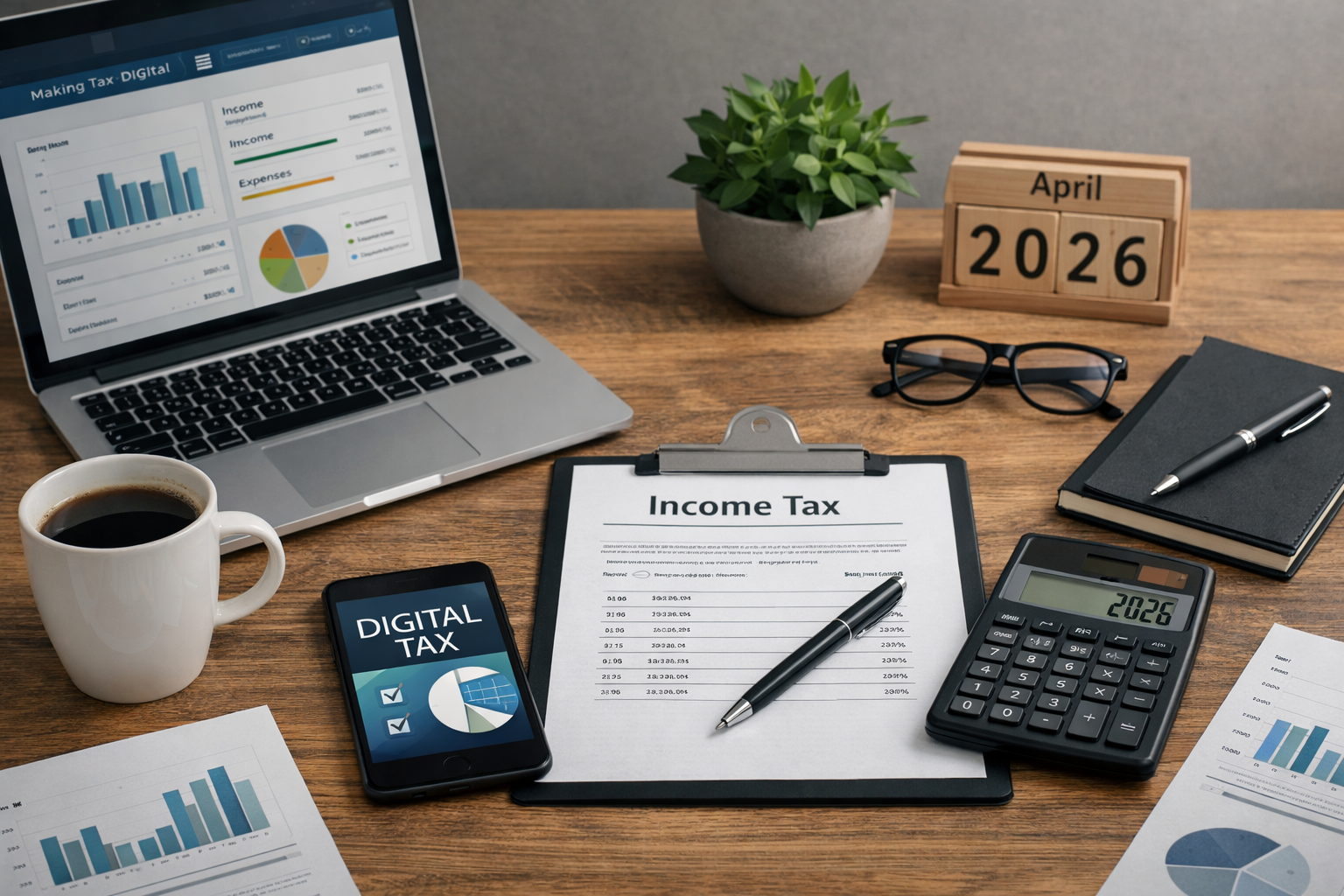
Making Tax Digital for Income Tax: What Sole Traders Need to Do Before April 2026
If you are a sole trader, Making Tax Digital for Income Tax is no longer something to deal with later.
From 6 April 2026, some sole traders and landlords will need to keep digital records and send updates to HMRC using compatible software. For many small businesses, that means changing how income and expenses are recorded, how often information is sent to HMRC, and what software is used to stay on top of it.
For some people, that sounds like more admin.
Done properly, it can also be the point where your business becomes more organised, more efficient, and less stressful to run.
At AMP Eleven, we help sole traders and small businesses make practical improvements that actually make life easier. That includes advice on Making Tax Digital for Income Tax, help choosing the right software, support with digital record keeping, and ongoing services such as bookkeeping and payroll, so you are not left trying to figure it all out alone.
And the deadline is closer than it looks. For businesses joining Making Tax Digital for Income Tax from 6 April 2026, the first quarterly update is due by 7 August 2026. Under HMRC’s standard update periods, that first submission covers 6 April to 5 July 2026, so the move to digital record keeping needs to happen from day one, not months down the line.
What is Making Tax Digital for Income Tax?
Making Tax Digital for Income Tax is HMRC’s new system for reporting self-employment and property income.
Instead of relying only on one annual Self Assessment process, eligible taxpayers will need to use compatible software to:
keep digital records
send quarterly updates to HMRC
submit their tax return through software
This is a major change for sole traders who are used to handling everything at year end. It means better record keeping throughout the year and a more consistent approach to managing tax.
Who needs to use Making Tax Digital for Income Tax?
Making Tax Digital for Income Tax is being introduced in stages.
If your qualifying income is over £50,000, you will need to use it from 6 April 2026.
If your qualifying income is over £30,000, you will need to use it from 6 April 2027.
The government plans to extend it to qualifying income over £20,000 from 6 April 2028. Qualifying income means your total gross income before expenses from self-employment and property.
So even if April 2026 does not affect you immediately, this is still something worth preparing for now.
What sole traders need to do now
For most sole traders, the smartest move is to get ahead of this early.
1. Check whether the rules apply to you
Do not assume HMRC will sort it all out for you. You need to understand whether your income level means you will need to join Making Tax Digital for Income Tax and when that will happen. HMRC says that if you think you need to sign up but have not received a letter, you should still check whether and when the rules apply to you.
2. Choose the right software
You will need Making Tax Digital software that works for your business. That means software that can keep digital records, handle quarterly tax updates, and support your tax return process properly.
This is where many sole traders get stuck. There are lots of software options, but not all of them will suit the way you work.
3. Get your records in order
If your income and expenses are already messy, Making Tax Digital will feel like a headache.
If your records are clean and up to date, the transition becomes much easier.
That is why now is the right time to improve your processes rather than waiting until the deadline gets closer.
4. Put a proper system in place
Making Tax Digital for sole traders is not just about ticking a compliance box. It is about having a setup that helps you stay on top of your business, avoid last-minute stress, and make better decisions throughout the year.
Why this feels stressful for small businesses
For a sole trader or small business owner, this is not just a tax change.
It can mean:
learning a new system
moving away from spreadsheets or paper records
choosing software
keeping records updated throughout the year
making sure bookkeeping, tax, and payroll all work together
That is where the pressure builds.
Not because the rules are impossible, but because most business owners are already busy enough.
How AMP Eleven can help
This is where we can take the stress out of it.
We help sole traders and small businesses understand what Making Tax Digital for Income Tax means in practice, not just in theory.
That includes helping you:
work out whether the changes apply to you
choose the right software for your business
get set up on the right licences
improve your digital record keeping
manage bookkeeping and payroll alongside your wider admin
build a system that actually works day to day
The aim is simple.
Instead of leaving you to figure out HMRC guidance, software choices, and admin changes on your own, we help you put the right structure in place and keep it running smoothly.
Why acting early matters
Even if you are not yet required to join Making Tax Digital for Income Tax, acting early gives you more time to get comfortable with the process.
It also means you can choose software properly, build better habits, and avoid a rushed change later on.
For businesses that are already near the threshold, the earlier you prepare, the easier this will be.
Book a free consultation
If you are a sole trader or small business owner and you are unsure what Making Tax Digital for Income Tax means for you, we can help.
We can talk through:
whether the changes apply to you
what software makes sense for your business
how to make record keeping easier
how AMP Eleven can support your bookkeeping, payroll, and ongoing compliance